
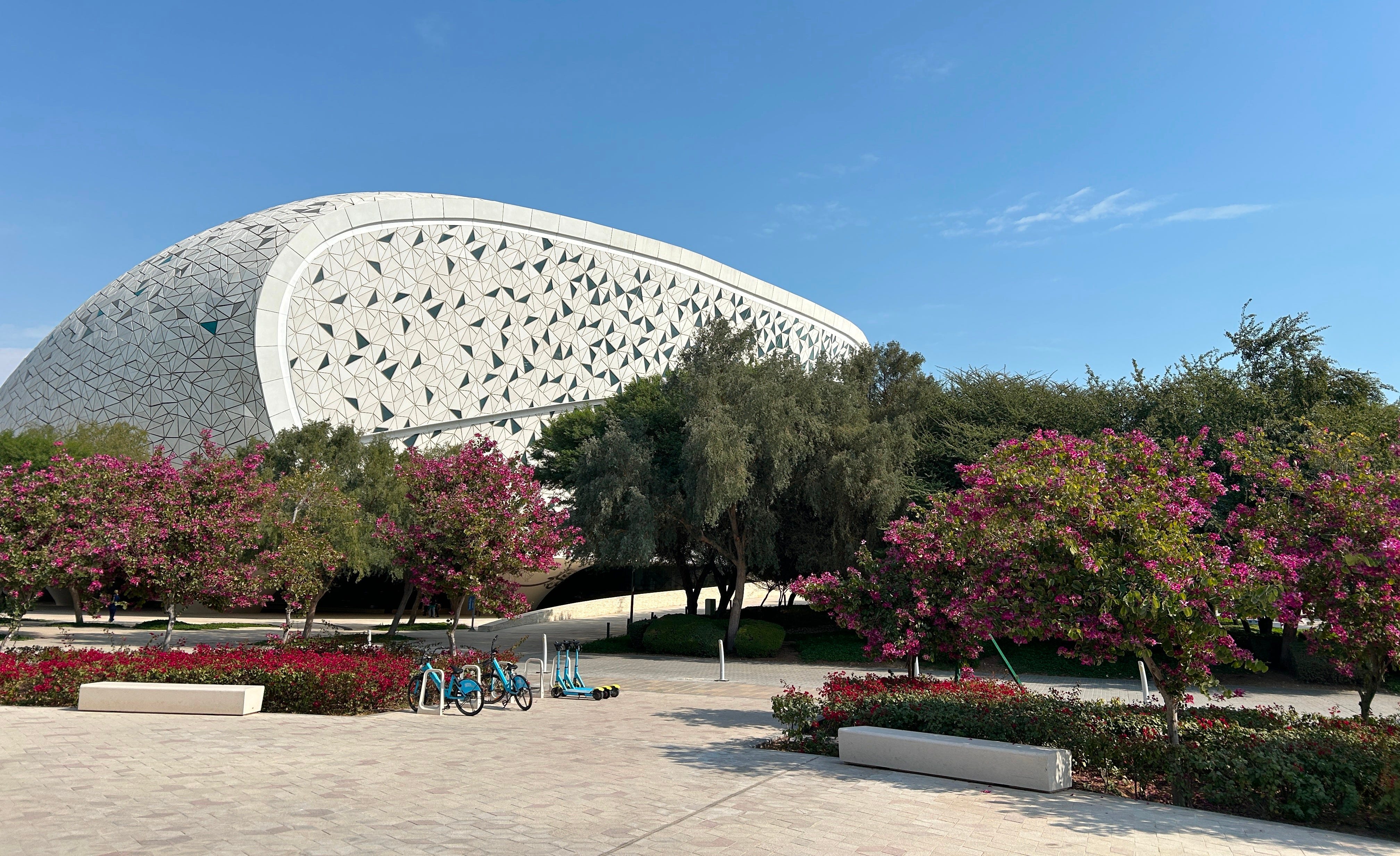
Georgetown University in Qatar is hiring three faculty members in international politics (and more in other areas).
So if you have the option, why should you come to Qatar?
The country is incredibly, almost stunningly, safe. After a month or so of living here, you begin to realize that Western (and especially American) societies are never on less than yellow alert—you are always on guard for threats to your person or property. Here, you just … aren’t. People don’t worry about theft or disorder, and they especially don’t worry that a crazy driver (there are many) might shoot them. Living in a safe society again (my third one, after Doha 2013-2014 and Shanghai 2004) has done much to convince me that the level of disorder and actual threat that Americans in particular tolerate (and will even, bafflingly, defend) is, actually, unacceptable.
(No, I’m not justifying, say, deploying the National Guard to U.S. cities — rather, I am discussing the entire complex of grime, aggression, and antisocial behavior that gets written off as the cost of living in civilization, or at least America. It need not be! And taking the mitigation of that disorder seriously as a goal might really do a lot for Americans’ quality of life!)
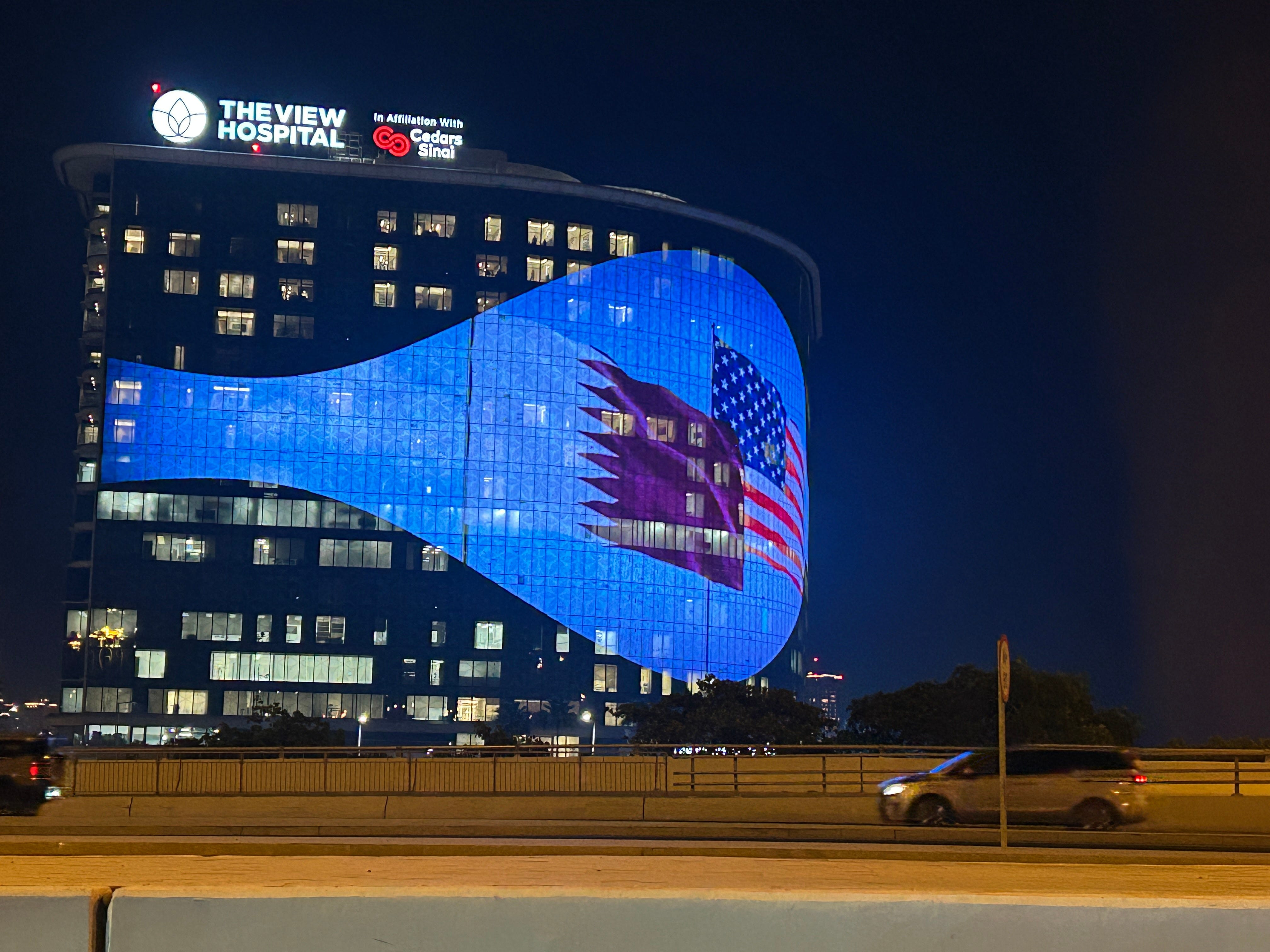
Social services are generally of high quality and almost universally much less expensive than their U.S. counterparts. The medical care is good and disorientingly easy to access; transportation infrastructure (including, now, a metro system) is great; and excellent schools are available in several different national flavors (including American, French, British, and Swiss). In many ways, Qatar benefits not only from wealth but also from the simple recency of its development: second-mover advantage is real, and skipping a lot of twentieth century buildouts has meant moving straight to the twenty-first century with no penalties.

Skeptics of life in the Arabian Gulf countries often lob the charge that life here is “superficial”. This is overstated. To the extent that they mean flashy, well, it absolutely is. But Doha isn’t Dubai, which has made flash part of its brand.


Yes, there’s a lot of luxury shopping here, if that’s your thing (or if it’s your allergy); no, there’s not a lot of heritage sites here compared to similarly populated countries like Uruguay, Armenia, or Lithuania. Qatar has been inhabited for a long time but always thinly relative to its current size. And, yes, a lot of the buildings and cars are new and meant to impress—if you had a gross national product of several hundred thousand dollars per citizen, well, why wouldn’t you let loose on some indulgences?
Against all that, though, are the parts less obvious to tourists, especially those who never leave the shoreline: this is a country oriented around family—principally Qatari families, but also expat families. (I’m going to note here that not everyone is in this charmed circle; more below.) It is also a welfare state designed to funnel investments into health and education. This is not obvious to folks here on a Qatar Airways stayover, but if you are considering a longer-term relocation it is essential. (As a side note, though, family-orientation means if you’re un-familied but looking to become part of a household, you might have a more challenging time.)


True, many leisure activities involve going to the mall. (Boy, there are a lot of malls.) But the malls are nice. That may be hard to believe if you’re coming from a place where “dead malls” rival thriving ones, but it is true. Mall culture here is (with obvious differences) what I remember from the Eighties—except that, well, instead of a middling regional mall many shopping centers are more like luxury destinations, with some moving to a tier somewhat beyond luxury. Functionally, this makes sense: it’s hot—really hot—and malls are great places to go as a family to browse, shop, and eat in air-conditioned comfort. (I see you judging, but let me remind you that this is exactly what American malls were for.) If you view them less as “shopping centers” and more as “walkable destinations”, then you can reorient yourself correctly—and, again, be reminded of the family-centrality of the place.


So, sure, some parts of Qatar’s society are superficial. The same is true everywhere. I do think there’s at least some jealousy in how some folks frame the charge. For others, it is also true that Qatar’s cultural depth can’t match what’s on their doorstep—if you are in San Francisco, New York, or London, for instance. Of course not. But that’s often not the right comparison set—and even if it is, well, see above about crime and affordability.
More on point are those who highlight that, for the bulk of the country’s inhabitants (80-plus percent of whom are foreigners on work visas or residency tied to work), Qatar is not a forever home. Well, no, and that’s part of the deal: eventually, you will leave. Is that really so bad, though? The compensation more than makes up for that, and you can in fact work here for quite a long time — in my institution, many folks are passing the fifteen-year mark, with every apparent intention of staying another decade or more.
Still others might note that it’s not all high-paid work and fancy malls. And, no, it’s not.


The bulk of those who come to work here are not well-compensated expat workers. The issues of workers’ conditions dominate coverage of the country in many outlets, and I won’t rehash them here in part because I have nothing personally to add to what has been discussed and debated at length. I will note that Qatar does, in fact, change, and decade-old news reports are no longer a good guide to much of the country. (For one point, much of the push to build infrastructure that generated so much coverage is done because the infrastructure is now largely in place.) On the other hand, it’s impossible not to be struck by the stark disparities in living conditions.
Nevertheless, conditions here aren’t reducible to simple impressions or a five-day visit. The popularity of locally-made authentically-Italian butter chicken pizza provides, as they say, a rich text:

What quickly becomes evident living here is that secondhand impressions just aren’t as useful in understanding a place as in castigating—or praising—it. The population of the country is far more South Asian than Arab. (I’ve had so many conversations about Bangladeshi politics with Uber drivers that I’ve begun to hallucinate that I’m becoming Tom Friedman.) And I don’t just mean that there are vast but invisible labor forces somewhere, such that this ratio is visible only in the statistics; no, I mean that when you rent a car you’ll probably do so from a Keralan firm or when you go to the grocery store you will see a wider array of nationalities than most universities admit.
Western / North American / Australian expats make up a small share of the community. Even so, English is a lingua franca, even if it’s many people’s second or fourth language; you can get by, perhaps with no small guilt at the monoglot privilege, without learning more than a few phrases in Arabic. But it is not like this is an expat bubble, unless you choose to make it so. It’s a real, living place with all the contradictions and complexities that come with it.
And, yes, you can get alcohol, and you can buy pork, even though both require a license and a trip to the QDC store. (The alcohol selection is simultaneously expansive and limited — craft beer is hard to source, although Chimay is plentiful. Lacking a reliable source for carnitas is harder to adjust to.)
Not everyone will find the place equally welcoming, although members of some communities might want to check with their fellows rather than making assumptions. And for some people, especially Muslims or Arabs worn down by Western hostility or alienation, moving to a place where the Adhan (call to prayer) is audible five times daily can come as a relief.
I like it here. I even like the weather, with the exception of about three weeks during summer. (I have some gripes about the air quality.) I like my institution; I particularly like the eagerness, dedication, seriousness, and variety of my students. (In one class of ten last year, we had, I believe, seven or eight different nationalities represented.) For my line of work (thinking about international relations and U.S. foreign policy professionally), the distance and perspective that working here affords helps avoid the distortions and faddishness of U.S.-based discourses. (Your professional mileage may vary.) Not only is it possible to do good academic work here, but good academic work gets done here. I expect that to accelerate over time.
Yet factors besides the White House may make posts in this region more attractive, and not only in material terms. In many U.S. states, tenure at public universities is tottering; for many faculty at private universities, it is becoming more and more relevant that tenure cannot survive the death of a university. Beyond that, campaigns to reduce the workplace autonomy and intellectual freedom of academics are succeeding quite well in many institutions, both public and private. (If you’re working in a British university, the pitch is simpler: you’re making poverty wages compared to what’s on offer here.)
It is not for everyone, and it will involve some real introspection about tradeoffs. It should, however, be considered seriously—and not just as an “escape hatch” but as a genuinely superior alternative to many posts in the West. It’s time to stop thinking of only “First World” institutions as desirable and instead start recognizing that there is a global market for global talent—and that may entail choices that would have been surprising in the past.